Portfolio Strategy
How to Add NDA Projects to Your UX Portfolio Without Breaking Trust
Learn how to include confidential or NDA-protected UX projects in your portfolio by anonymizing details and focusing on process, role, and decisions.

By Ömer Arı
2 min read
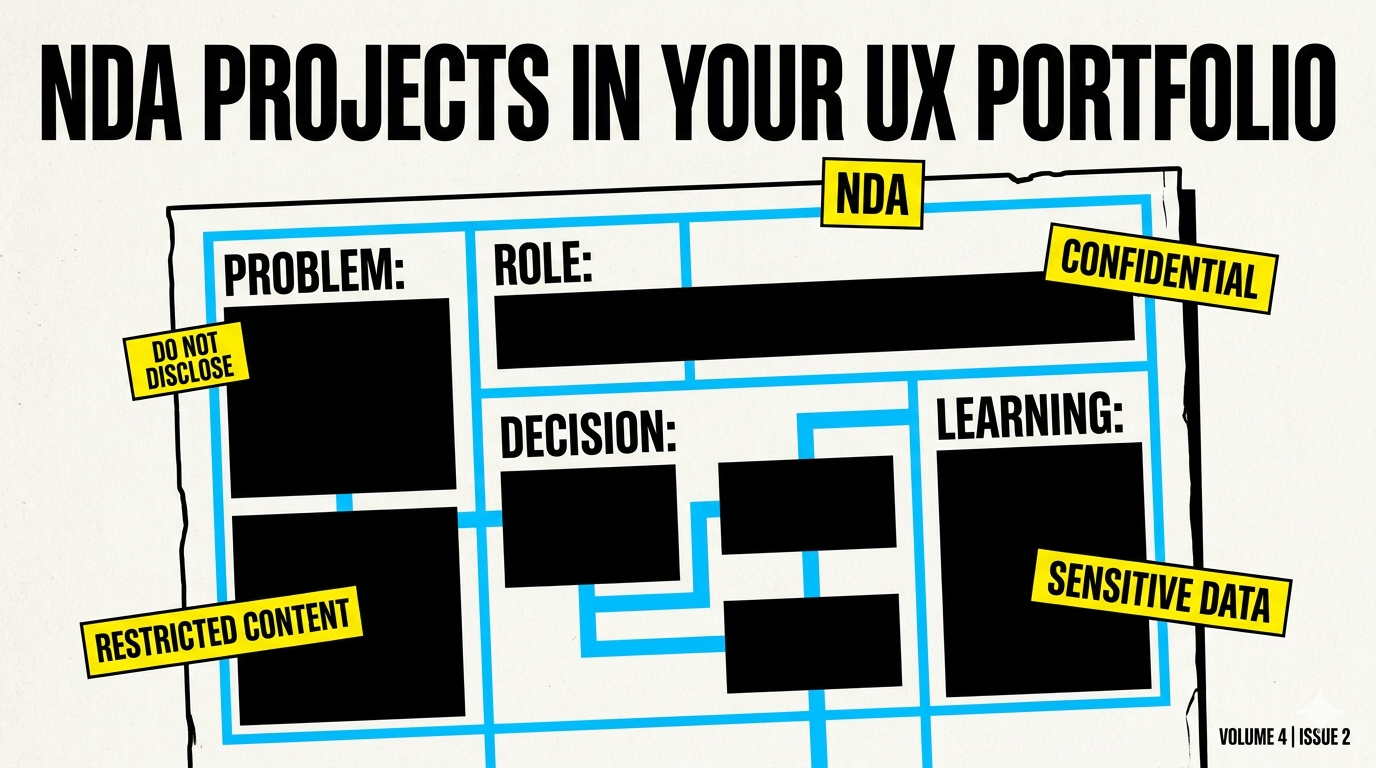
Confidential work can still become a thoughtful case study.
But you need to protect trust.
The goal is to show your thinking without exposing sensitive information.
NDA does not always mean no portfolio
Some designers avoid writing about confidential projects completely.
Sometimes that is the right choice.
But in many cases, you can still discuss the project at a higher level by anonymizing details.
Always respect your legal and company obligations. If you are unsure, ask for permission.
What to hide
You may need to remove or change:
- Company name
- Product name
- Exact metrics
- Screens with real data
- Internal tools
- Roadmap details
- Customer names
- Strategic plans
- Technical architecture
Do not try to be clever with sensitive information.
When in doubt, leave it out.
What you can still show
You can often still explain:
- The type of problem
- Your role
- The design process
- User needs
- Constraints
- Decision-making
- Collaboration
- Learnings
- Anonymized outcomes
A hiring team is often more interested in how you think than in the confidential details.
Use abstracted visuals
Instead of showing real screens, you can use:
- Simplified wireframes
- Redacted screenshots
- Recreated flows
- Generic diagrams
- Before/after structure without real data
Make it clear that visuals are anonymized.
Use safe language
Instead of naming the company, write:
- A B2B SaaS platform
- A fintech onboarding flow
- An internal analytics tool
- A mobile checkout experience
- A healthcare scheduling product
This gives context without exposing confidential information.
Final thought
A good NDA-safe case study does not reveal secrets.
It reveals judgment.
Related guides
- You may also want to show your contribution in a team project: read the guide
- You may also want to explain design decisions without exposing confidential details: read the guide
Related reading
Apr 29, 2026
2 min read
How to Turn Portfolio Rejection Into Better Case Studies
Learn how to use portfolio rejection, recruiter silence, and interview feedback as signals to improve your UX case studies.
Apr 28, 2026
2 min read
What to Include in a Product Design Portfolio
A focused checklist for the evidence, case studies, and narrative details that make product design portfolios stronger.
Apr 23, 2026
3 min read
How to Turn a Simple UX Project Into a Strong Case Study
Simple UX projects can still reveal strong design thinking. Learn how to find the story inside a smaller project.